
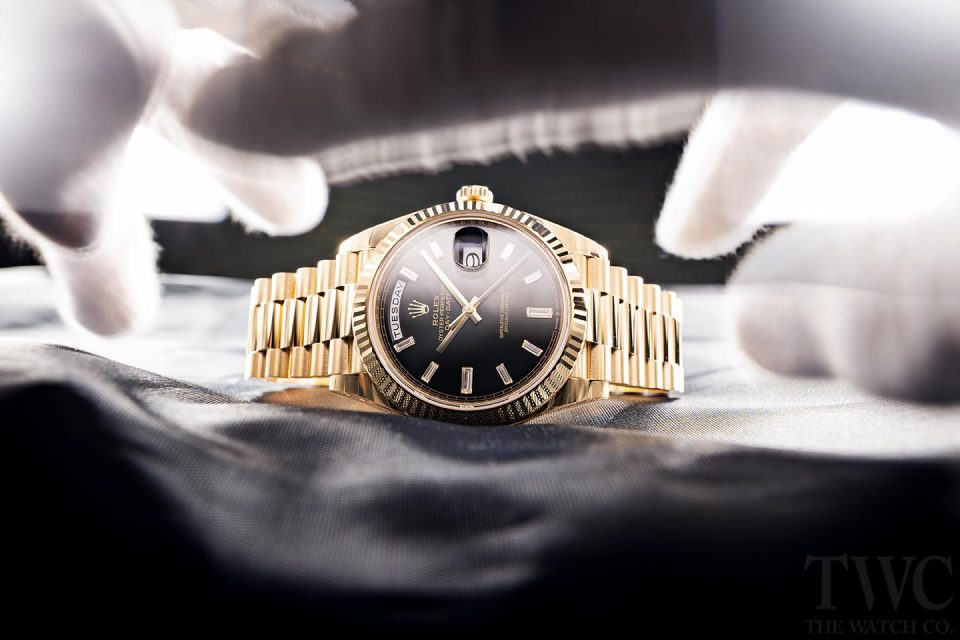
When someone sells a Rolex to a watch retailer in Manhattan, it generally seems as if everything else becomes unnecessary once a quote is made. However, in reality, the whole process of selling only begins. Whereas gold buyers analyze the physical assets before them, and gold coin buyers dissect value through grading and demand trends, Rolex watches undergo a far more involved process.
Even when someone is ready to sell a Rolex in NYC, the watch doesn’t just get priced and moved on; it gets routed through a structured decision path. Understanding what happens next makes it easier to see why offers vary so much between buyers, and why the quoted price is only one part of the story.
Initial Authentication and Internal Verification Process
As soon as the Rolex watch arrives, the very first step is not about its cost, but it is all about its authentication. This requires checking the serial number as well as the reference of the watch, which will either be found between the lugs or rehaut depending upon when the watch was manufactured. In this way, it becomes possible to determine the correct year and model of the watch.
The next step is the inspection of the movement. To do this, the case has to be opened using special tools that would prevent interference with the seals or damage to the back case.
This step often reveals more than expected. A watch may look completely original on the outside but still contain replaced internal parts like:
- Non-matching rotors
- Service-replaced bridges
- Later-production components fitted during servicing
Even if everything functions perfectly, these differences matter because they affect how the watch is classified later. Next comes the external evaluation. Dial printing, lume aging, bezel alignment, bracelet fit, and clasp engravings are all compared against factory specifications. Rolex servicing history also plays a role here; some service centers replace parts with updated versions that don’t match original production runs.
It could be that the water-resistant test could be conducted; however, it is not really important at this stage. It is vital to find out about the authenticity of the wristwatch, its current status against what it was when it left the factory. This is an early stage where no price can be attached as yet.
Market Grading, Condition Analysis, and Value Positioning
Once authenticity is confirmed, the watch moves into grading, which is where value positioning begins to take shape. Condition is not judged loosely; it’s broken down into specific physical characteristics. Case edges are examined to see if polishing has softened the original lines. Bracelet stretch is measured because it indicates wear history. Dial condition is checked for surface clarity, lume consistency, and aging patterns.
Originality is even more important than overall condition. No matter how perfect a Rolex may look, one with its original dial, hands, and bracelet will always be worth more than one fitted with replacement service parts, even if the replacement watch looks just as good. In an active marketplace such as the NYC area, scarcity is also a huge factor. Some of the references, particularly discontinued sports watches, can jump into the luxury category very rapidly based on demand and availability. No speculation is used by experts, who follow auctions and dealerships around the world for accurate information on each model.
There is also a similar system applied to other types of assets. For instance, gold coin buyers not only consider the metal, but also the quantity in which it was struck, the quality of striking, and the demand from collectors. After all of that is determined, the Rolex watch gets classified according to liquidity:
- High liquidity: high demand and fast turnover
- Medium liquidity: slow turnover with select buyers
- Low liquidity: special requirements for resale
That classification becomes the basis for pricing strategies and determines where the watch will finally be sold. This is because the watch is no longer considered a commodity; it has become a structured asset with a known resale characteristic.
Price Determination, Offer Construction, and Allocation Strategy
After pricing is determined, it then becomes a process of structuring an offer based on multiple parameters, rather than just a number. The factors are:
- Trends of Rolex demand worldwide
- Recent auction prices for the same references
- Resell value based on condition
- Local demand conditions in New York
- Whether the timepiece was previously designated as liquidable
For that reason, two separate offers might exist for a single watch; they use different resale strategies in other markets. Models with high demand usually receive higher offers since they can be flipped quickly to collectors. On the other hand, regular models, or those with serviceable parts, should receive offers close to the wholesale price. The final factor to consider is allocation: where is the watch ultimately sent? Depending on the model, a Rolex may be:
- Sold directly to private collectors
- Routed through dealer-to-dealer networks
- Exported to international markets with stronger demand
- Sent to auction houses for competitive bidding
- Held for refurbishment or timing-based resale
These two pathways represent two types of strategies that the company can pursue. A rare Daytona would be sent to a collector’s channel, where competitiveness would raise its price higher. A common Datejust would be sold using the wholesale approach, which promises better returns due to a fast turnover rate.
While unknown to many vendors, this process constitutes one of the major causes behind the difference in prices among consumers. When someone tries to sell Rolex NYC, he does not only sell the watch; rather, he sells his chances to resell the product at one of several prices.
Restoration, Certification, and Resale Preparation Workflow
When the watch has been allocated, the next process involves getting it ready for resale or redistribution. In case the watch is being resold, it may undergo servicing processes such as ultrasonic cleaning, replacement of gaskets, checking of lubrications, fitting of bracelets, and pressure tests.
Restoration is approached in a way that does not over-polish or replace unnecessary parts to avoid lowering the value of collectors’ items. It ensures that the item maintains its originality while remaining in good condition enough to sell. Some watches come together with certification or paperwork. These may include reports on the condition, service history, or other relevant information. Documentation is especially useful for increasing buyer confidence in high-value watches and helping sell them faster.
Documentation plays an even more important role when preparing a Rolex for sale through auction. Not all Rolexes are suitable for sale by way of auction and receive such treatment. In many cases, they are assigned to spare parts or less profitable routes of resale. Yet, they maintain their value in the chain of distribution and are not treated as dormant stock.
This stage ensures every watch has a defined purpose either as a collector piece, a resale item, or a functional asset within inventory systems. In New York’s luxury watch environment, traceability is standard practice, meaning every Rolex has a clear path after evaluation rather than an informal or untracked resale process.
Conclusion
The role of the Rolex evaluation in New York does not stop with the watch simply being priced and then going out into the wider market system. Instead, there is a whole process that follows the evaluation which consists of verification, condition grading, market positioning, price establishment, and allocation to certain resale channels. Each step serves to establish further the watch’s true position in the market. The watch’s identity is established through the verification process, while condition grading, market analysis, and allocation determine how the watch will actually sell. For the seller, this is important because the offer can depend on the buyer who wants the watch for sale. This means that a Rolex is more than an item to price; it is something that exists within the broader context of market analysis that includes rarity and demand.
